

You run targeted ad campaigns across Instagram, TikTok, Facebook, or LinkedIn. Your video creatives grab attention, your ad copy generates clicks, and traffic is pouring in. But when you check your analytics, the campaign isn’t paying off. Clicks are mounting, but your intake form sits empty and sales aren’t coming through.
When paid social campaigns underperform, business owners often assume the audience targeting was wrong or the ad budget was too low. In reality, the issue usually sits on the receiving end of those clicks: the landing page.
Sending fast-moving, low-intent social media traffic to a generic homepage or a cluttered corporate portal is a quick way to burn through your ad budget. Social media users browse with short attention spans; if your landing page doesn’t match their expectations instantly, they’ll bounce.
Here is a breakdown of how to build high-converting landing page architectures specifically engineered to capture social media traffic and convert clicks into paying clients.
The Social Traffic Reality: Why Homepages Fail Ad Campaigns
A standard company homepage is built like a digital library. It features main navigation links, company history, broad service overviews, blog feeds, and secondary announcements. It’s meant for visitors who are exploring your brand broadly.
Social media traffic operates completely differently. Someone clicking your ad is in the middle of scrolling through a fast-moving social feed. They clicked because your ad promised a specific solution to a specific problem.
  SOCIAL MEDIA AD CLICK                GENERIC HOMEPAGE ROUTING (HIGH DROPOFF)
  +-----------------------+            +---------------------------------------+
  | "Need a custom web    |   ====>    | - Header navigation menus (10+ links) |
  | app built in 30 days? |            | - Company history and mission statement|
  | Click here!"          |            | - Generic service list & blog feeds   |
  +-----------------------+            +---------------------------------------+
                                                         |
                                                         v
                                           [ Confused Visitor Bounces ]

  SOCIAL MEDIA AD CLICK                DEDICATED LANDING PAGE (HIGH CONVERSION)
  +-----------------------+            +---------------------------------------+
  | "Need a custom web    |   ====>    | - Matched headline matching ad hook   |
  | app built in 30 days? |            | - Direct proof & video walkthroughs    |
  | Click here!"          |            | - Single focused conversion form      |
  +-----------------------+            +---------------------------------------+
                                                         |
                                                         v
                                            [ High-Intent Lead Captured ]
Dropping that visitor onto a generic homepage forces them to search through menus to find what was promised in the ad. If they don’t see it within two seconds, they leave.
A dedicated landing page removes every distraction and focuses entirely on validating the ad’s promise, building immediate trust, and guiding the visitor toward a single conversion action.
1. Establishing Instant Message Match Above the Fold
The area visible before a user scrolls down is your above-the-fold zone. When social media visitors land on your page, you have roughly three seconds to answer three subconscious questions in their minds:
- Am I in the right place?
- Does this offer match the ad I just clicked?
- What am I supposed to do next?
+----------------------------------------------------------------------------------+
|                       ABOVE-THE-FOLD LANDING PAGE LAYOUT                         |
+----------------------------------------------------------------------------------+
|                                                                                  |
|   [ Clear Brand Logo ]                                    [ Direct Support Link ]|
|                                                                                  |
|   ATTENTION HEADLINE MATCHING AD COPY                                            |
|   Subheadline clarifying the exact business outcome and timeline.                |
|                                                                                  |
|   +------------------------------------+   +---------------------------------+   |
|   | HERO VISUAL / CASE STUDY VIDEO     |   | SHORT LEAD INTAKE FORM          |   |
|   | (Real product interface or result) |   | - Full Name                     |   |
|   |                                    |   | - Work Email                    |   |
|   |                                    |   | [ GET YOUR CUSTOM QUOTE ]       |   |
|   +------------------------------------+   +---------------------------------+   |
|                                                                                  |
|   [ TRUST BADGES: Client Logos | Star Ratings | SSL Encryption Certificates ]    |
|                                                                                  |
+----------------------------------------------------------------------------------+
The Friction Point
If your ad promises “Custom E-Commerce Web Development,” but your landing page header reads “Innovative Digital Transformation Solutions,” you create immediate disconnect. The visitor feels misled and hits the back button.
The Fix
- Mirror the Ad Headline: Use the exact same core angle, hook, and keywords from your social ad inside your main page title (H1).
- Include a Direct Subheadline: Clearly explain what your service does, who it’s for, and the practical outcome it delivers.
- Keep Forms Visible Above the Fold: On desktop screens, place your primary lead intake form or primary action button high enough that visitors don’t have to scroll to take action.
2. Speed and Technical Ergonomics for Mobile Viewports
Over 80% of social media ad clicks originate from mobile devices (smartphones running native social apps like Instagram or TikTok).
When a user taps an ad link, the platform opens your landing page inside an in-app browser overlay. These in-app browsers process scripts and render pages slower than standard desktop browsers.
+---------------------------------------------------------------------------------+
|                    IN-APP BROWSER SPEED & CONVERSION CHECKLIST                  |
+---------------------------------------------------------------------------------+
|                                                                                 |
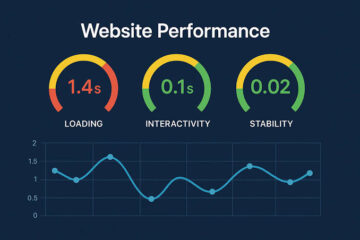
|  - Sub-1.5 Second Total Page Load: Cut out heavy JS libraries and raw images.   |
|  - Zero Layout Jumps (CLS < 0.1): Prevent dynamic elements from shifting text.  |
|  - Comfortable Touch Targets: Buttons must be at least 48px tall for easy taps. |
|  - Auto-Fill Inputs: Enable standard HTML form flags so mobile browsers auto-fill.|
|                                                                                 |
+---------------------------------------------------------------------------------+
Key Technical Optimizations
- Inline Critical CSS Assets: Render top-of-page text instantly without waiting for full external stylesheets to download.
- Compress Hero Visuals: Serve WebP image formats scaled explicitly for mobile screen widths, keeping hero image file sizes under 100KB.
- Sticky Action Bar: Keep a slim call-to-action button fixed to the bottom of the screen as the user scrolls, allowing them to open the contact form at any point.
3. High-Trust Social Proof Architecture
Social media users are naturally skeptical of online ads. They see hundreds of sponsored posts daily, many promising unrealistic results. To convert that traffic, your landing page must establish credibility quickly through authentic trust signals.
+----------------------------------------------------------------------------------+
|                            SOCIAL PROOF PLACEMENT MATRIX                         |
+----------------------------------------------------------------------------------+
|                                                                                  |
|   1. LOGO STRIP          ===> Positioned right below the hero section           |
|                               Displays recognizable client or partner logos.    |
|                                                                                  |
|   2. EMBEDDED REVIEWS    ===> Placed directly adjacent to your lead form        |
|                               Features real client quotes with photos and names.|
|                                                                                  |
|   3. VIDEO CASE STUDIES  ===> Integrated mid-page before project breakdowns     |
|                               Short 30-second clips showing actual client results.|
|                                                                                  |
+----------------------------------------------------------------------------------+
Effective Social Proof Elements
- Real Project Visuals over Stock Photos: Replace generic stock photography with actual screenshots, live project walk-throughs, or video clips showing your team’s work.
- Specific Data Points: Instead of vague claims like “We build fast sites,” state precise results: “We cut load times by 68% for a retail client, boosting mobile sales by 34%.”
- Third-Party Review Embeds: Include real review snippets with client names and verified project details to prove authenticity.
4. Single-Goal Architecture: Eliminating Exit Points
Every external link, menu item, or secondary option on a landing page gives visitors an excuse to leave without completing your lead form.
       CLUTTERED MULTI-CHOICE PAGE                 SINGLE-GOAL LANDING PAGE
  +----------------------------------+        +----------------------------------+
  | [NAV] Home Services Blog Contact |        | [ LOGO ONLY - NO NAV LINKS ]     |
  | Main Offer Title                 |        | Focused Main Offer Headline      |
  | [ Link to Article A ]            |        | Social Proof & Direct Benefits   |
  | [ Link to Portfolio ]            |        | [ SINGLE INTAKE FORM ]           |
  | [ Social Media Icons ]           |        | Zero External Exit Links         |
  +----------------------------------+        +----------------------------------+
    (Low conversion / High leaks)               (Maximum lead capture focus)
The Architecture Rules
- Remove Main Navigation Headers: Strip away standard top navigation links (
Home,About Us,Services,Blog) so visitors stay focused on the page’s main message. - Remove Footer Social Links: Don’t include social media icons in the footer. Sending visitors back to Instagram or LinkedIn just leads to more social feed distractions.
- Limit the Page to One Core Action: Whether your goal is booking a strategy call, requesting a web quote, or starting a trial, every button on the page should point to that single action.
5. Converting Friction into Progress: Smart Lead Forms
The contact form is where interest turns into a qualified lead. If your form looks like an intimidating tax document, potential clients will abandon it before finishing.
+----------------------------------------------------------------------------------+
|                       MULTI-STEP FORM PROGRESSION FLOW                           |
+----------------------------------------------------------------------------------+
|                                                                                  |
|   STEP 1: Low-Friction Selection (Progress Bar: 33%)                             |
|   "What service does your business need help with?"                             |
|   [ Custom Web Dev ]   [ E-Commerce Build ]   [ Digital Marketing / SMM ]     |
|                                                                                  |
|   STEP 2: Scope Qualification (Progress Bar: 66%)                                |
|   "What is your target launch timeline?"                                         |
|   [ Immediate (Under 30 Days) ]   [ 1-3 Months ]   [ Planning Phase ]            |
|                                                                                  |
|   STEP 3: Contact Details (Progress Bar: 100%)                                   |
|   "Where should we send your customized quote?"                                  |
|   [ Name Input ]   [ Work Email Input ]   [ Phone Input (Optional) ]             |
|                                                                                  |
|   Result: Higher completion rates compared to long single-page form blocks.      |
|                                                                                  |
+----------------------------------------------------------------------------------+
Lead Form Best Practices
- Keep Initial Forms Short: Ask only for essential details on your primary form (Name, Email, and Project Need). You can gather deeper specifications during your follow-up call.
- Use Multi-Step Interactive Forms: For complex client inquiries, split questions across simple interactive steps. Asking users to select option boxes feels easier than filling out empty text fields.
- Clear Button Copy: Replace generic terms like “Submit” with clear, value-focused button copy like “Get My Custom Development Quote.”
Architecture Comparison: Standard Page vs. Social Landing Page
The breakdown below shows how a standard corporate page compares to a dedicated landing page designed specifically for social media ad traffic:
| Structural Element | Standard Corporate Page | Dedicated Social Landing Page |
| Top Navigation | Full site menu header with multiple drop-down categories. | Completely removed to prevent traffic leaks. |
| Headline Focus | Broad brand messaging ("Empowering Digital Growth"). | Matched directly to specific social ad hooks and terms. |
| Call-to-Action (CTA) | Multiple competing choices scattered across sections. | Single primary action button duplicated strategically down the page. |
| Page Speed Target | 3.0 to 5.0+ seconds on mobile viewports. | Optimized under 1.5 seconds for in-app mobile browsers. |
| Lead Capture Method | Generic static contact form hidden on a secondary page. | Dynamic form embedded prominently above the fold. |
| Conversion Intent | Exploration and general browsing. | Immediate lead capture and direct response sales. |
Building Landing Pages Engineered for Ad ROI
At CrystalJenix Technologies, we don’t just design landing pages that look great; we engineer custom conversion platforms designed to maximize your advertising return on investment (ROI).
By pairing fast code architecture with tailored copy, clean mobile layouts, and smart lead intake forms, we build landing pages that capture social media traffic and convert clicks into paying clients.
Instead of burning ad spend on clunky homepages or slow templates, investing in custom landing page architecture helps you scale your paid social campaigns profitably.
Quick Landing Page Health Audit
Review your active campaign landing pages against these checks:
- [ ] Message Match Check: Does your page title mirror the main angle, hook, and keywords used in your running social ad?
- [ ] Mobile Speed Audit: Does your page load in under 1.5 seconds inside an in-app browser view on mobile devices?
- [ ] Navigation Cleanup: Have you removed top navigation links and external footer links to keep visitors focused?
- [ ] Above-the-Fold Clarity: Can a mobile user see your main value proposition and lead form without scrolling?
- [ ] Social Proof Placement: Is verified social proof (client logos, review ratings, case study clips) placed directly near your main form?
Is your social media ad traffic bouncing without converting? Let me know when you’re ready, and we can move on to the next topic in our calendar!