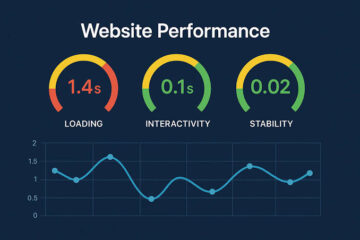


Imagine spending months designing a sleek, visually stunning website for your business. You launch with excitement, run a few social posts, and wait for organic traffic to roll in. Three months later, nothing happens. Your site barely gets indexed, organic leads are non-existent, and your pages take forever to render on mobile devices.
When you dig into the issues, you discover the problem: your site was built without SEO in mind. Fixing it requires rewriting key parts of the layout, re-structuring dynamic URL hierarchies, and stripping out bloated JavaScript frameworks. You essentially end up paying for the site twice.
       TRADITIONAL (FLAWED) APPROACH              SEO-FIRST (ENGINEERED) APPROACH
  +-------------------------------------+      +-------------------------------------+
  | 1. Design visual layouts            |      | 1. Keyword & Intent Architecture    |
  | 2. Write custom/template code       |      | 2. Content & URL Hierarchy Mapping  |
  | 3. Launch the website               |      | 3. Technical SEO & Schema Framework |
  | 4. Attempt to "add SEO" retroactively|      | 4. Clean Performance-Focused Coding |
  +-------------------------------------+      +-------------------------------------+
                    |                                             |
                    v                                             v
  [ Slow Load Times, Re-design Costs, ]        [ Instant Indexing, Fast Load Speeds, ]
  [ Indexing Errors, Low Rankings     ]        [ Sustainable Organic Growth          ]
This scenario plays out constantly for growing companies. Most teams treat Search Engine Optimization as a final polish—something you spray onto a site right before it goes live. But modern search engines don’t just evaluate the words on your pages; they analyze your site’s core underlying infrastructure.
At CrystalJenix Technologies, we use an SEO-first web development approach. By planning site architecture, URL routing, performance standards, and schema markup before typing a single line of code, you build a digital asset that search engines can easily crawl, index, and rank from day one.
What Does “SEO-First Web Development” Actually Mean?
SEO-first development means technical optimization guides your entire build process, rather than acting as an afterthought. It shapes everything from your database design and server environment to your URL structures and front-end rendering engines.
If you bring an SEO specialist into a project after the codebase is locked, their hands are tied. They can tweak meta titles, fix alt tags, or write blog posts, but they can’t easily alter fundamentally flawed URL routing, clean up deep server delays, or rebuild heavy JavaScript menus without breaking existing layouts.
Starting with an SEO-first blueprint aligns your technical setup with search engine requirements from the initial discovery phase:
+-------------------------------------------------------------------+
|               SEO-FIRST DISCOVERY & ARCHITECTURE                  |
+-------------------------------------------------------------------+
| - Map site structure directly to target keyword clusters           |
| - Choose server environments tuned for low Time to First Byte     |
| - Design mobile-first layouts built for low layout shift          |
+-------------------------------------------------------------------+
                                 |
                                 v
+-------------------------------------------------------------------+
|                  DEVELOPMENT & CODE IMPLEMENTATION                |
+-------------------------------------------------------------------+
| - Write semantic HTML5 markup with dynamic Schema.org JSON-LD     |
| - Implement server-side rendering (SSR) for instant indexing      |
| - Optimize resource delivery (inline CSS, preloaded assets)       |
+-------------------------------------------------------------------+
                                 |
                                 v
+-------------------------------------------------------------------+
|                  PRE-LAUNCH TECHNICAL AUDITING                    |
+-------------------------------------------------------------------+
| - Validate crawl efficiency using automated log file checks        |
| - Test Core Web Vitals targets across mobile/desktop viewports    |
| - Enforce strict HTTP-to-HTTPS redirect & canonical map rules     |
+-------------------------------------------------------------------+
6 Technical Foundations of an SEO-First Build
Building an SEO-first website means addressing critical technical factors early in the engineering process. Here are six core architectural elements that need attention before launch:
1. Site Architecture and Crawl Budget Efficiency
Search engine spiders don’t have unlimited time or resources to spend exploring your site. They operate on a strict crawl budget—a set limit on how many pages and server resources Googlebot will evaluate during a given session.
If your site architecture is messy, with deep nested directories, orphan pages, or redundant URL parameters, search bots waste crawl budget on low-value assets before reaching your core service pages.
       POOR / DEEP ARCHITECTURE                    OPTIMIZED FLAT ARCHITECTURE
            (Crawl Friction)                            (SEO-First Standard)

              [ Home ]                                       [ Home ]
                 |                                              |
             [ Category ]                      +----------------+----------------+
                 |                             |                |                |
           [ Sub-Category ]               [ Services ]     [ Case Studies ]   [ Blog ]
                 |                             |                |                |
           [ Deep Page ]                 [ Custom Dev ]   [ Project A ]    [ SEO Post ]
                 |
         [ Orphaned Target ]
An SEO-first blueprint uses a flat site architecture, ensuring visitors and search bots can reach any core page within three clicks of the homepage:
- Organize pages into distinct, logical topic clusters.
- Use clean, readable URL structures (e.g.,
[domain.com/web-development/](https://domain.com/web-development/)instead of[domain.com/index.php?cat=12&id=99](https://domain.com/index.php?cat=12&id=99)). - Ensure every page connects naturally through contextual internal links.
2. Server Response Times and Time to First Byte (TTFB)
Page speed starts at the server level. Before a browser can render your images or layout, it sends a request to your host and waits for the first byte of data. This metric is known as Time to First Byte (TTFB).
If your server takes 1.5 seconds just to respond, your site feels slow regardless of how optimized your front-end code is. High TTFB is usually caused by cheap shared hosting, unoptimized database queries, or a lack of dynamic caching.
An SEO-first infrastructure fixes server performance by:
- Deploying sites on dedicated cloud servers optimized for your specific tech stack.
- Setting up Object Caching (using Redis or Memcached) to reduce database workload.
- Using a Global Content Delivery Network (CDN) like Cloudflare to serve cached pages from servers close to your visitors.
3. Rendering Engine Choices: Server-Side vs. Client-Side
Modern web development relies heavily on JavaScript frameworks like React, Vue, or Angular. While these tools create fast, app-like user experiences, default Client-Side Rendering (CSR) can hurt organic search performance.
In a pure CSR setup, your server sends a blank HTML document alongside heavy JavaScript files. The user’s browser executes that script to render the actual page content. While Google can execute JavaScript, indexing client-side rendered content requires a second processing phase. This delay can leave your pages temporarily unindexed or improperly evaluated.
CLIENT-SIDE RENDERING (CSR) - INDEXING DELAYS:
[ Server Sends Blank HTML ] ===> [ Googlebot Fetches JS ] ===> [ Deferred Rendering ] ===> [ Indexing Delay ]

SERVER-SIDE RENDERING (SSR) - INSTANT INDEXING:
[ Server Executes Code ] ===> [ Sends Full HTML Package ] ===> [ Googlebot Indexes Instantly ]
An SEO-first approach relies on Server-Side Rendering (SSR) or Static Site Generation (SSG) using frameworks like Next.js or Nuxt.js. The server generates complete, readable HTML markup before sending it to the user or search engine, ensuring immediate indexing without relying on browser script execution.
4. Core Web Vitals Optimization Built Into the Core Code
Google’s Core Web Vitals assess real-world user experience and serve as direct ranking factors. Rather than trying to patch performance issues after launch, an SEO-first build enforces strict performance targets right in the codebase:
- Largest Contentful Paint (LCP): Measures how fast your main content element renders. Google targets an LCP under 2.5 seconds. Developers achieve this by preloading critical hero images, converting assets to WebP or AVIF formats, and eliminating render-blocking CSS.
- Interaction to Next Paint (INP): Measures visual responsiveness when a user clicks or taps an element. Google requires INP to stay under 200 milliseconds. Passing this standard requires splitting long JavaScript tasks, deferring non-essential scripts, and streamlining interactive elements.
- Cumulative Layout Shift (CLS): Measures layout stability while a page loads. The target score is under 0.1. Setting explicit height and width attributes on images, video embeds, and dynamic elements prevents annoying layout jumps.
+------------------+------------------------------------+--------------------------+
|  METRIC METRIC   |       WHAT IT MEASURES             |   GOOD TARGET THRESHOLD  |
+------------------+------------------------------------+--------------------------+
|  LCP             | Main content render speed          | Under 2.5 Seconds        |
|  INP             | User interaction response delay   | Under 200 Milliseconds   |
|  CLS             | Visual layout stability            | Under 0.1 Score          |
+------------------+------------------------------------+--------------------------+
5. Dynamic Structured Data Schema Architecture
Schema markup (Schema.org) is structured code added directly to your HTML to help search algorithms understand your content’s context. It powers rich search snippets—like star ratings, event dates, pricing details, and FAQ accordions.
Adding schema manually page-by-page or through plugins can quickly become messy. An SEO-first development process builds structured data templates directly into your CMS or database backend.
When you create a new service page, blog post, or project case study, your platform automatically generates validated JSON-LD schema markup:
JSON
{
  "@context": "https://schema.org",
  "@type": "ProfessionalService",
  "name": "CrystalJenix Technologies",
  "image": "https://crystaljenix.com/assets/logo.png",
  "url": "https://crystaljenix.com",
  "telephone": "+2340000000000",
  "priceRange": "$$$",
  "address": {
    "@type": "PostalAddress",
    "addressLocality": "Abuja",
    "addressCountry": "NG"
  },
  "offers": {
    "@type": "Offer",
    "name": "Custom Web Development",
    "category": "Software Engineering"
  }
}
6. Mobile-First Architecture
Because Google uses mobile-first indexing, its search bots crawl and evaluate the mobile version of your site to establish rankings across all devices.
An SEO-first mobile strategy goes beyond basic responsive CSS:
- Eliminates heavy desktop scripts that consume CPU resources on mobile devices.
- Uses responsive image configurations (
srcset) to serve smaller, appropriately sized images to handheld screens. - Ensures touch targets (buttons, links, form inputs) are large enough to tap easily without accidental clicks.
The Business Value: SEO-First Builds vs. Retrofitted Sites
Building for search engines from the start requires upfront planning, but it delivers clear advantages over fixing a poorly optimized site down the line:
| Strategic Business Factor | Retrofitted Traditional Build | Engineered SEO-First Build |
| Initial Indexing Time | Weeks or months of crawling issues and errors. | Instant, seamless indexing across all core pages. |
| Long-Term Performance Costs | High ongoing expenses fixing code bloat and slow loads. | Built on optimized architecture requiring minimal refactoring. |
| Crawl Budget Allocation | Wasted on duplicate URLs, broken tags, and render delays. | Fully optimized; bots crawl and index priority pages efficiently. |
| Ad Campaign Efficiency | Slower load times hurt landing page experience scores. | Fast response times improve quality scores and reduce ad costs. |
| Core Web Vitals Compliance | Requires constantly fighting template and framework limits. | Built to exceed Google’s performance targets out of the box. |
The Business Impact of Page Performance
Technical web development decisions directly affect your company’s revenue and conversion performance.
Data from Google’s Web Performance Benchmarks shows that a one-second load delay can drop mobile conversion rates significantly. Furthermore, research indexed by Akamai’s Web Performance Report highlights that a tiny 100-millisecond delay in load time can lower user conversion rates by up to 7 percent.
                LOAD TIME VS CONVERSION RATE DROP
   +-----------------------------------------------------------+
   |  0.1s Delay  ===>  7% Drop in Conversion Rate             |
   |  1.0s Delay  ===>  Up to 20% Drop in Conversions          |
   |  3.0s Delay  ===>  53% of Mobile Visitors Abandon Site    |
   +-----------------------------------------------------------+
When search engines see users abandon slow, unresponsive pages, they drop those pages in rankings. Technical SEO and user experience performance are deeply linked.
5 Red Flags That Your Development Team Is Ignoring SEO
If you’re currently working with a web dev agency or freelancer, keep an eye out for these five warning signs:
- They don’t ask for keyword research or site structure before designing: If they start building layouts without understanding your main services and target search terms, they are designing purely for visuals, not discoverability.
- They rely on visual builder plugins for core layout structures: Excessive reliance on heavy drag-and-drop builder plugins loads bloated code scripts that harm Core Web Vitals performance.
- They build single-page JavaScript applications without SSR: Delivering a site that relies heavily on client-side rendering without pre-rendered HTML can slow down indexing and hurt ranking performance.
- They ignore canonical tags and HTTP redirect rules: If your site loads under both
http://andhttps://, or works with and withoutwww, search engines will treat those variations as duplicate content, splitting your domain authority. - They treat mobile development as an afterthought: If mobile design simply means squishing a desktop layout onto a smaller screen without optimizing touch targets or media assets, mobile indexing performance will suffer.
Building Your SEO-First Web Architecture
At CrystalJenix Technologies, we integrate technical SEO directly into our custom web development process. We ensure every site we build features fast load times, clean code structures, and strong search engine compatibility.
Instead of treating optimization as a quick post-launch fix, an SEO-first strategy builds search authority right into your codebase. The result is a fast, reliable website designed to rank higher and convert visitors into long-term clients.
Pre-Launch SEO Checklist for Web Projects
Before making your new custom web platform public, verify these technical checks:
- [ ] XML Sitemap Validation: Is your XML sitemap dynamically generated, error-free, and submitted directly to Google Search Console?
- [ ] Robots.txt Configuration: Does your
robots.txtfile allow access to essential CSS and JS assets while blocking private admin directories? - [ ] Canonical URL Tags: Does every page contain a self-referencing canonical tag to prevent duplicate content issues?
- [ ] Structured Data Schema Audit: Are JSON-LD schemas validated using Google’s Rich Results Testing Tool?
- [ ] Core Web Vitals Pass Rate: Do your primary page templates pass Google’s LCP, INP, and CLS performance targets on mobile devices?
- [ ] 310 & 301 Redirect Mapping: Have you mapped 301 redirects for all legacy URLs to protect existing link authority?
Ready to launch a fast, custom website built to rank and convert? Let’s discuss your web development strategy today.